

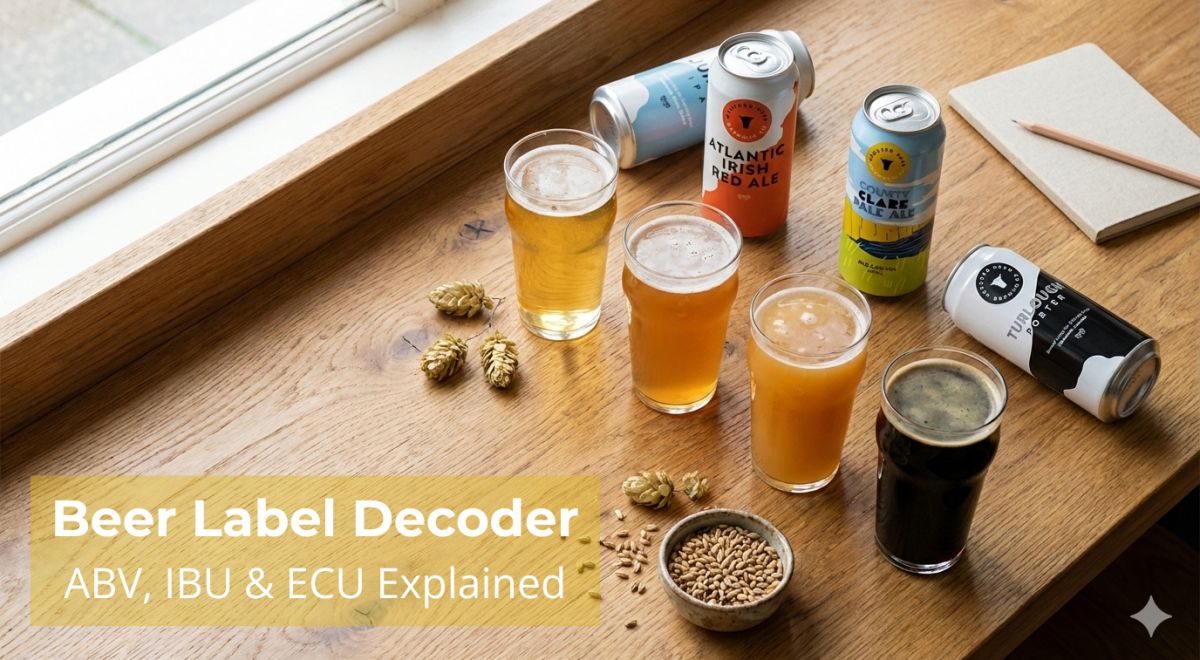

Unlock the Secrets: What ABV, IBU and ECU Really Mean
Every industry has its own language and brewing is no exception. The more TLAs (three letter acronyms) you drop into a conversation, the more knowledgeable you sound. ABV, IBU, ECU… and suddenly you’re wondering if you accidentally wandered into a physics exam.
The good news: once you know what these TLAs mean, they’re genuinely useful. They help you predict how a beer will taste, feel, and even look before you crack it open.
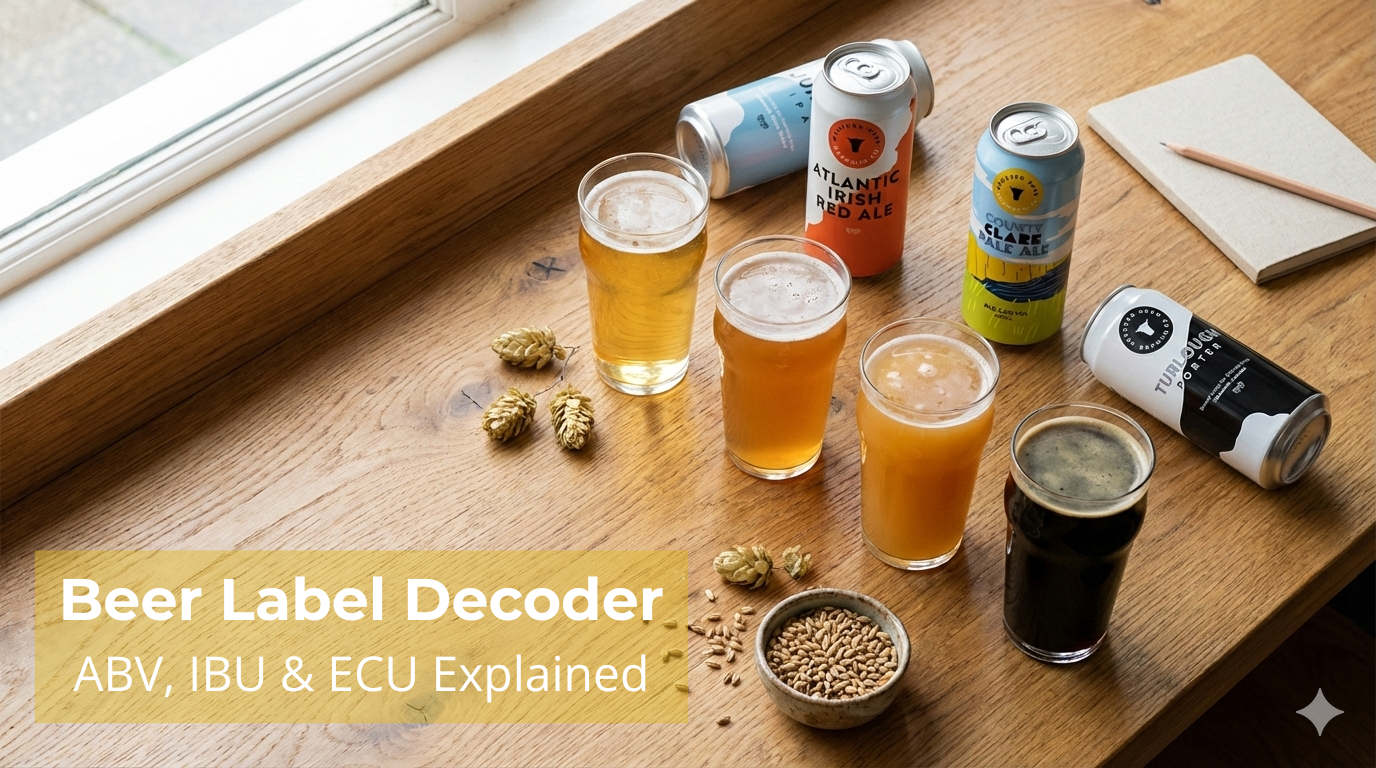
Let’s translate the most common ones.
TLA #1: ABV — Alcohol By Volume
What it means:
ABV is the percentage of alcohol in the beer by volume. A beer at 5.0% ABV is 5% alcohol.
Why it matters:
ABV gives you a rough idea of:
- Strength (obviously), but also
- Body and sweetness (higher ABV often means more residual malt character), and
- Perceived warmth (especially in stronger ales)
Typical ranges (very loosely):
- 0.5–1.0%: low/no alcohol beer
- 3.0–4.5%: sessionable, easy-drinking
- 4.6–6.5%: “standard” strength for many styles
- 6.6–9.5%: strong IPA, dubbel/tripel territory
- 9.5%+: big hitters (imperial stout, barleywine, some tripels)
Quick tip: ABV doesn’t tell you “quality” or “flavour intensity” on its own. A 4.2% pale ale can be bursting with hop aroma, while an 8% beer can drink surprisingly smooth.
TLA #2: IBU — International Bitterness Units
What it means:
IBU measures the concentration of bitter compounds (mainly iso-alpha acids) from hops in the finished beer.
Why it matters (and why it can be misleading):
IBU is a great starting point for understanding bitterness, but your palate doesn’t experience bitterness in isolation. Bitterness is shaped by:
- Malt sweetness (more sweetness = bitterness feels softer)
- Alcohol (can lift or sharpen perception)
- Water profile (sulphate can accentuate crisp bitterness)
- Hop character (some hops taste sharper or smoother)
- Carbonation and temperature (both affect perception)
So: a 60 IBU stout and a 60 IBU IPA will not taste equally bitter.
Rough guide:
- 5–15 IBU: very low bitterness (some wheat beers, mild lagers)
- 15–30 IBU: balanced (pilsners, ambers, many pale ales)
- 30–50 IBU: firmly bitter (classic pale ales, some IPAs)
- 50–80+ IBU: bitter-forward (many IPAs, double IPAs)
Quick tip: If a label lists high IBU, check the style too. In hazy/NE-style IPAs, perceived bitterness is often intentionally kept lower even if the hopping is huge (because much of it goes into aroma rather than sharp bitterness).
TLA #3: EBC / ECU — European Brewery Convention / European Colour Units
What it means:
EBC / ECU is about colour. In practice, you’ll more commonly see EBC in Europe, but ECU is sometimes used as a shorthand for colour units.
Why colour matters:
Colour can hint at:
- Malt profile (pale = bready/crackery; amber = toasty/caramel; dark = roast/chocolate/coffee)
- Body and perceived richness (not a guarantee, but often correlated)
The reality in 2026:
- In Europe and the UK/Ireland, EBC is the most standard colour scale you’ll see.
- In the US, it’s often SRM (Standard Reference Method).
Handy conversion (approx.):
- EBC ≈ SRM × 1.97
- SRM ≈ EBC ÷ 1.97
Rough EBC guide (very approximate):
- 4–8 EBC: pale lager territory
- 8–14 EBC: golden ales, some pilsners
- 14–30 EBC: amber ales, red ales
- 30–60 EBC: brown ales, porters (lighter end)
- 60+ EBC: stout country
Quick tip: Colour tells you about malt choice and process, not sweetness. You can have a dark beer that finishes crisp and dry, and a pale beer that drinks lush and full.
Bonus TLAs You’ll See a Lot
IPA — India Pale Ale
Not a measurement, but one of the most common TLAs in beer. These days, “IPA” usually signals hop-forward flavour and aroma (citrus, tropical, pine, resin, etc.), but there’s a huge range: West Coast, hazy, session, double…
APA — American Pale Ale
Generally hop-led like IPA, but often a bit less intense and more balanced. “APA” can be a great entry point if you like hoppy beers but don’t want the full IPA punch.
DIPA — Double IPA
Bigger IPA: more alcohol, more hops, more intensity. Not always “more bitter” in perception, but typically more powerful overall.
NEIPA — New England IPA
A hop-forward style of IPA known for its hazy appearance, soft juicy mouthfeel, and big tropical/citrus aromas, usually with lower perceived bitterness than a classic West Coast IPA
How to Use These TLAs When Choosing a Beer
If you only remember three things:
- ABV tells you strength (and often hints at body).
- IBU gives a clue about bitterness, but balance matters more than the number.
- EBC/ECU/SRM tell you colour, which can suggest malt character (but not sweetness).
A practical example:
- 5.2% ABV / 35 IBU / 12 EBC
Likely a balanced pale ale: noticeable bitterness, golden colour, easy enough to drink. - 6.8% ABV / 60 IBU / 8 EBC
Likely a hop-forward IPA: pale, punchy, bitterness more prominent. - 4.5% ABV / 25 IBU / 80 EBC
Likely a stout/porter-like beer: dark, roasty, bitterness may feel smooth rather than sharp.
At the end of the day, these TLAs aren’t there to make beer feel complicated — they’re there to give you a few useful clues before you pour. Once you know what ABV, IBU and EBC/ECU mean, it makes it much easier to choose a beer to suit your personal taste, whether you’re after something light and crisp, hop-forward and bitter, or dark and malt-led. They won’t tell you everything (that’s what the first sip is for), but they’re a handy starting point for understanding what’s in the can and enjoying beer with a bit more confidence.